
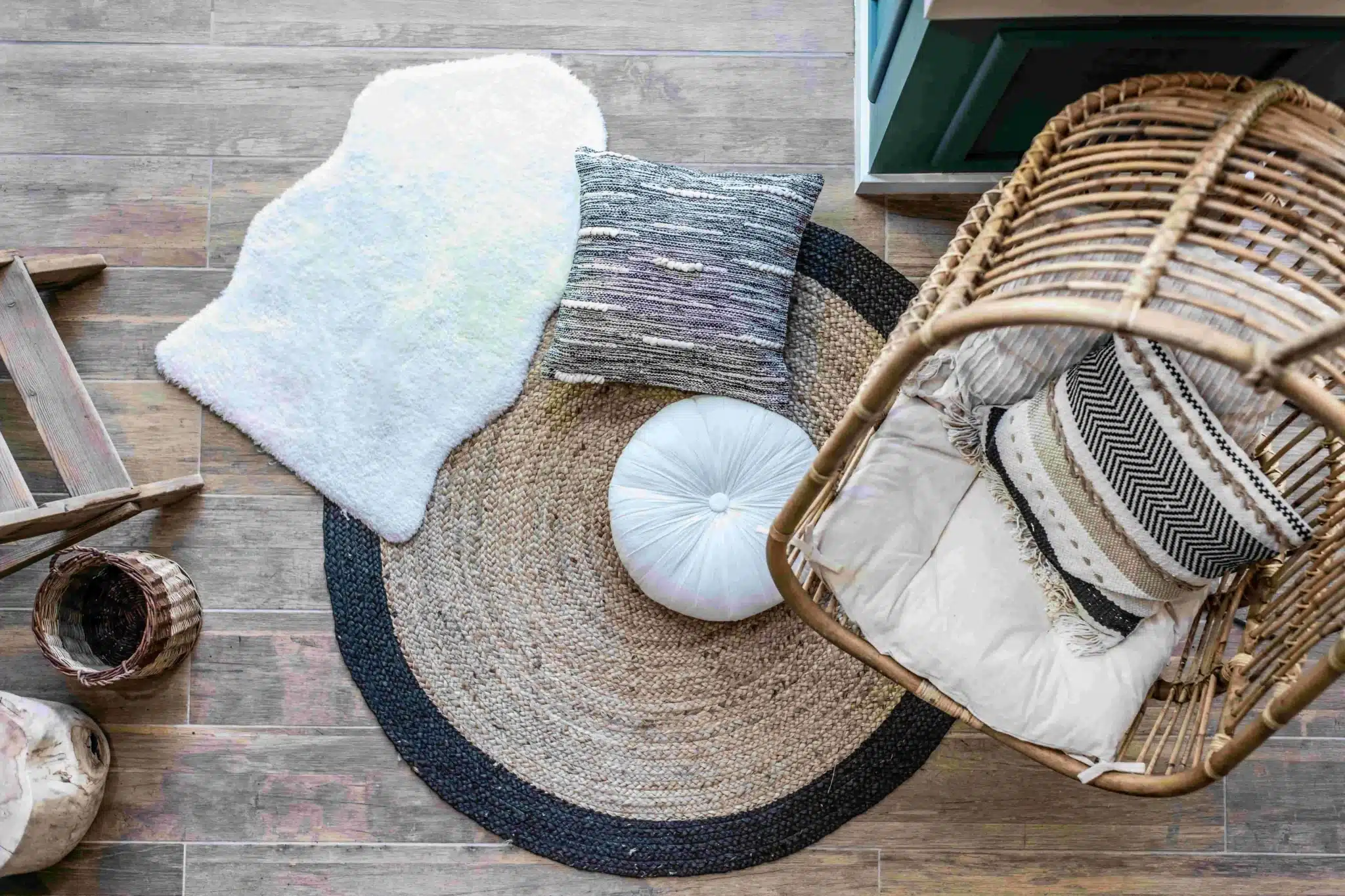
Textiles play a vital role in our everyday lives, shaping not only the aesthetics but also the functionality and sustainability of our homes. From the luxurious feel of silk to the rugged durability of jute, each fiber has unique properties that make it suited for specific purposes, such as rugs and upholstery. When choosing the right textile, factors like longevity, comfort, eco-friendliness, and affordability become crucial considerations.
In this blog, we’ll dive into the qualities of popular fibers, comparing them across these key categories to help you make informed decisions. It is important to remember that this analysis is intended to provide a generalized understanding of common textiles, recognizing that many variables can alter these results.
Textile Fiber Comparison
| Fiber | Longevity | Comfort | Eco-Friendly | Affordability | Pros | Cons |
|---|---|---|---|---|---|---|
| Wool (Sheep Fleece) | 9/10 | 8/10 | 8/10 | 6/10 | Naturally flame-retardant, stain- and odor-resistant, resilient, biodegradable. | Expensive, moth-prone, may felt or shrink, requires gentle cleaning. |
| Cotton & Linen (Plant) | 7/10 | 9/10 | 9/10 | 7/10 | Soft, breathable, versatile, biodegradable, hypoallergenic. | Wears out and fades faster, wrinkles easily, absorbs stains. |
| Jute (Plant) | 8/10 | 2/10 | 9/10 | 8/10 | Highly sustainable, biodegradable, adds natural texture, affordable. | Rough feel, low elasticity, degrades faster under moisture or UV exposure. |
| Silk (Silkworm) | 6/10 | 10/10 | 7/10 | 3/10 | Luxurious sheen and feel, strong for its weight, naturally biodegradable. | Expensive, sensitive to sunlight and moisture, stains easily. |
| Polyester (Synthetic) | 9/10 | 7/10 | 2/10 | 10/10 | Extremely durable, fade- and wrinkle-resistant, easy to clean, affordable. | Petroleum-based, non-biodegradable, traps heat, prone to static and pilling. |
| Nylon (Synthetic) | 10/10 | 7/10 | 2/10 | 9/10 | Very strong, abrasion- and fade-resistant, flexible, easy to clean. | Petroleum-based, static-prone, less breathable, can yellow with UV exposure. |
| Viscose (Semi-Synthetic) | 2/10 | 9/10 | 4/10 | 7/10 | Soft, breathable, drapes beautifully, mimics silk’s appearance. | Weak when wet, prone to shrinkage and pilling, not durable for heavy use. |
Conclusion
Understanding the natural strengths and weaknesses of each fiber helps you make smarter choices for your home and furnishings. While natural fibers like wool, cotton, and jute offer comfort and sustainability, synthetic options such as polyester and nylon deliver durability and affordability — and blends can often offer the best of both worlds.
To extend the lifespan and performance of any textile, specialized aftercare treatments can make a significant difference. At The Cleaning Guy, we enhance and protect fabrics through our ZebraSeal Treatments such as anti-microbial protection, UV resistance, stain guarding, flameproofing, and more. These treatments not only help preserve the beauty and feel of your textiles but also improve their functionality and resilience over time.
Whether you’re selecting new fabrics or caring for existing ones, an informed approach ensures your interiors remain both beautiful and long-lasting.
